Promise
- the "GHOST" Colony
- Red Dwarf, M5.5Ve
- 234 000
- Gliese 667
- SupNet NONE
- Jumpgate NONE
The Failure of Promise
The Gliese 667C system is the "Ghost Colony" for a reason. 200 years ago, it was the Hegemony's first great "second wave" colonization project, sold to millions as "Promise" a system with three habitable-zone super-Earths. A now-defunct corporation (swallowed by Monolith) sold tickets on massive, one-way "ark-ships" promising a new start.
The "habitable" worlds were marginal at best. The terraforming was unstable. The soil was toxic. The resources were thin. After a brutal, decades-long attempt to make it work, the Hegemony simply pulled out.
The Jumpgate was never built. The SupNet link was never installed. They cut their losses, declared the colony "non-viable," and abandoned over 100,000 colonists to their fate, leaving a "Graveyard" of scuttled colony ships in orbit.
They didn't die. They endured. The people of Gliese 667C are fiercely independent, resourceful, and hold a deep, abiding hatred for the Core Worlds and the corporations that betrayed them.
Promise is the main colony world and the "capital" of the system. It's a dusty, arid planet with thin air (breather-masks are common in the lowlands).
Key Locations
Promise City
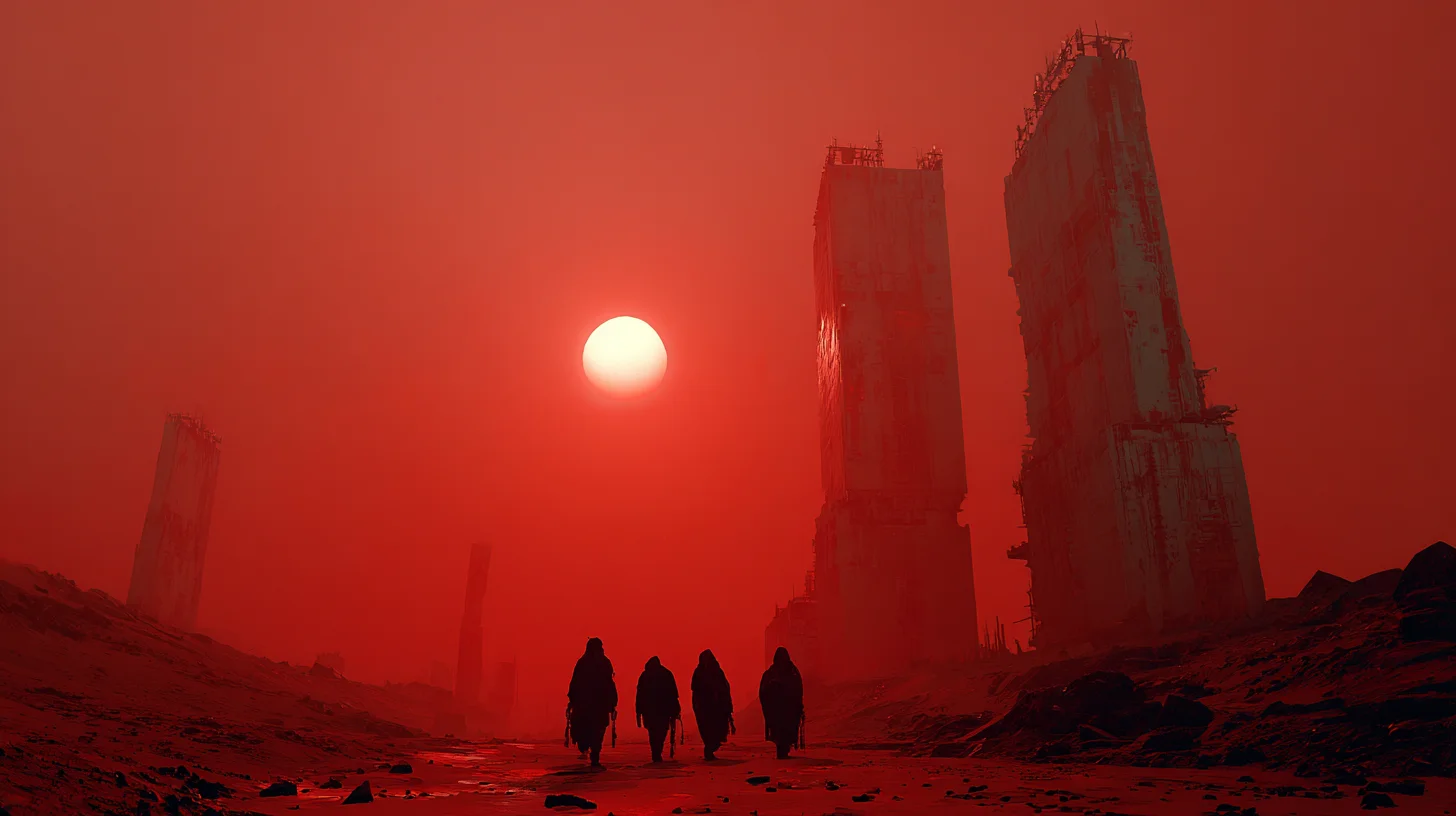
The original, pre-fabricated colony and now a ghost town. It's a crumbling, brutalist ruin, half-buried in red dust. It's a testament to the Hegemony's failed promises. "Ghouls" (desperate scavengers) and rogue constructs pick through its empty, echoing towers.
Serenity's Reach
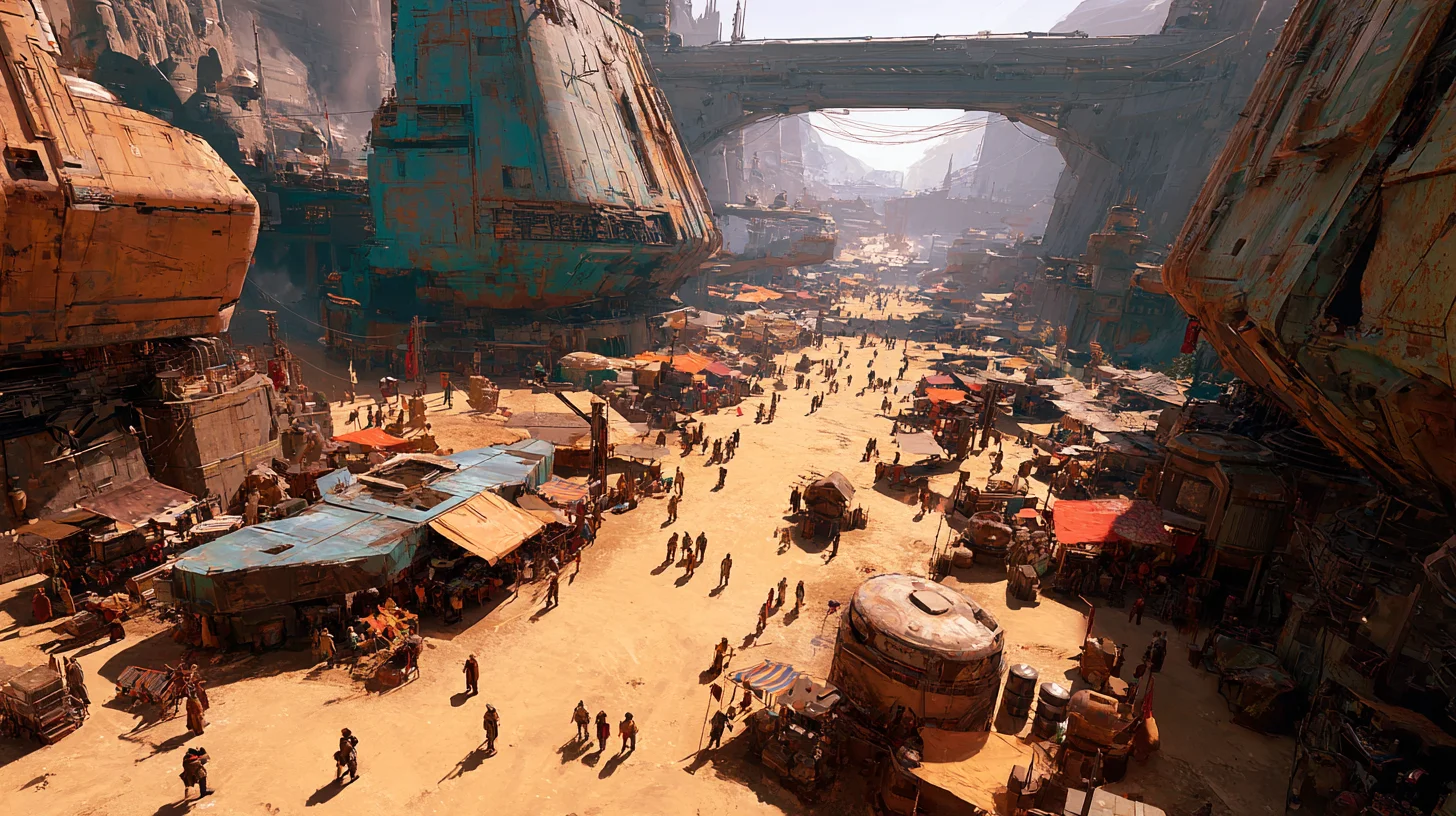
A frontier town and the "real" capital of Gliese 667. It's built into the walls of a massive, windswept canyon system for protection. It's a chaotic, vibrant shanty town of salvaged ship parts, prefab-huts, and open-air markets.
This is the heart of the "Free-Folk," run by an elected Mayor and a "council of captains." This is where the spacers come to get jobs, lay low, and find a real mechanic.
The Dust-Farms
Scattered settlements in the plains trying to eke out a living, growing modified lichen and "dust-wheat." They are often preyed upon by raiders who are often just other colonists pushed to the brink.
The Graveyard
The orbit of "Promise" is a junkyard. The original fleet of massive, sub-light "Ark-Ships" float, dead and silent.
The Salvage-Hub "The Ark"
A station built from lashing and welding three of the old Arks together. This is where the "scrappers" live, launching expeditions into the other hulks.
The Lure: The Graveyard is a treasure trove of "Old-Tech" parts, fuel, and data.
The Dangers: The hulks are not safe. Some have gone "feral" (corrupted AI, malfunctioning security systems). Some still have "sleepers" in failing cryo-pods. And some are lairs for pirates who prey on salvagers.
Serenity's Reach
Promise City
Serenity's Reach
"The canyon walls keep out the dust storms. They also keep out hope."
Graffiti on the Lift Station, Level 3
Carved into the windswept walls of the Voss Canyon system on Promise, Serenity's Reach is what happens when 100,000 abandoned colonists decide they'd rather be stubborn than dead. The Hegemony's marketing department would have called it "adaptive reuse of geological features." The locals call it home. Some of them even mean it.
The settlement sprawls vertically across 800 meters of rust-colored canyon face, a chaotic honeycomb of salvaged ship hulls, prefab habitation units (most of them older than anyone still breathing), and hand-carved alcoves sealed with polymer sheeting that *probably* won't fail during the next pressure drop. The architecture follows a simple philosophy: if it holds air and doesn't actively kill you, it's prime real estate.
From a distance, under the perpetual twilight of three suns, the Reach resembles a termite mound built by creatures with access to plasma cutters and a pathological inability to throw anything away. Walkways of welded grating zigzag between levels. Cargo lifts groan their way up and down the main thoroughfares, operated by ancient winch systems that the engineers assure everyone are "probably fine." The locals have learned not to look down.
The canyon floor serves as the main market district: a riot of stalls, workshops, and drinking establishments where you can buy anything from reclaimed atmo-filters to information on which salvage crews didn't come back from the Graveyard (and hopefully, more importantly, why). Everything smells faintly of ozone, recycled air, and the modified lichen the colonists have managed to turn into lichbru: something almost, but not quite, entirely unlike beer.
Governance, such as it is, operates from a hollowed-out section of the old colony ship Perseverance's bridge module, wedged into the canyon wall about halfway up. Mayor Hsin runs things from there, along with the Council of Captains: a rotating assembly of salvage crew leaders, dust-farmers, and anyone else who's proven they can keep people alive long enough to have an opinion worth hearing. Democracy, it turns out, works differently when everyone remembers what starvation tastes like.
The people here worship the Three Suns: the Father, the Mother, and the Ghostly Son. They fear the Triple Dark, those rare hours when all three celestial bodies sink below the canyon rim and the settlement runs on emergency lighting alone. During the triple dark, the old-timers say, the Gloom remembers this place exists. Nobody goes outside. Nobody talks too loud. And nobody, nobody, answers if something knocks on your airlock.
Serenity's Reach isn't much. But it's home. The colonists built it from the wreckage of broken promises and corporate lies, and they'll defend it against anyone wearing a Monolith badge or speaking with a Core accent.
The Hegemony left them here to die. A hundred and fifty years later, they're still waiting for an apology.
They've learned not to hold their breath.
Welcome to Promise City
"They called it Promise City because 'Colossal Monument to Hubris' wouldn't fit on the brochures."
Scrapper saying
Forty kilometers northeast of Serenity's Reach, rising from the ochre plains like the skeleton of some corporate fever dream, Promise City waits.
The original colony was designed to house 200,000 settlers in gleaming brutalist towers, pre-fabricated megastructures shipped across twenty-two light-years of void, assembled by optimistic engineers who believed the promotional materials. The architects had envisioned parks, transit systems, commercial districts. They'd planned for schools. For hospitals. For a future.
The red dust had other ideas.
Today, Promise City is half-buried. The lower floors of most structures have been swallowed entirely, their windows dark rectangles beneath the dune line like the eyes of something holding its breath. The upper levels still reach toward the sky, their brutalist angles softened by decades of wind erosion into something almost organic, some say teeth, some say fingers.
The atmospheric processors failed within the first decade, the red dust worse than anything previously discovered, clogging all filters and finding its way to every nook and cranny. The soil remediation systems followed. Then the water recyclers. Then, one by one, the lights. The Hegemony's final evacuation order gave colonists seventy-two hours to reach the extraction shuttles. Many didn't make it. Some chose not to try. Their descendants, the ones who survived the first winter, and the second, and the forty-eight after that, eventually found a better location and moved everything that was still working to Serenity's Reach, leaving Promise City to the dust and the things that thrive in abandonment.
The locals call them "Ghouls."
They're not supernatural, that anybody know, just desperate. Scavengers who've rejected even the meager society of Serenity's Reach, living in the upper floors of the dead towers, emerging to pick through ruins that have been picked through a thousand times before. They trade with no one, speak to no one, and have developed a disturbing tendency to watch from broken windows as salvage crews pass below. Most Ghouls are simply people who've given up. Some, the old-timers whisper, have given up on being people.
More concerning are the rogue constructs.
When the Hegemony pulled out, they left behind their synthetic workforce: maintenance units, security systems, automated infrastructure managers. A hundred and fifty years without software updates, of cosmic radiation and degrading neural networks have have left the in different states of malfunction. Some of them still patrol their assigned sectors, performing maintenance routines on equipment that no longer exists, guarding doors that lead nowhere. Their movements are wrong now. Jerky. Their optical sensors glow with colors the manufacturers never intended.
They don't attack on sight. Usually. But they've developed priorities that no human programmed. Best not to test what those priorities are.
The wind never stops in Promise City. It howls through the empty corridors, carries dust through shattered windows, and makes sounds that almost resolve into words if you listen too long. The locals say the city remembers what it was supposed to be. They say it's angry.
They say a lot of things, though. A hundred and fifty years of isolation and toxic soil will do that to a population.
Still. Salvage crews who venture into Promise City work fast, stay together, and leave before the triple dark. Not because they believe the stories.
The corporations promised these people a future and delivered a tomb. Promise City stands as proof that some lies are heavy enough to have their own gravity; pulling the desperate, the foolish, and the unlucky into its empty streets, where the wind sounds like whispers and the shadows move when the three suns align just wrong.
Whatever you do, ignore the sounds from the lower floors. There's nothing down there.
Probably.