
Careers
The Medic
"You want to know what I've learned cutting people open on the edge of nowhere? The human body is a miracle: a self-repairing, self-regulating, absurdly resilient miracle that wants to live so badly it'll keep fighting long after the mind has given up. It's also a disaster waiting to happen, held together by chemical balances and electrical impulses and structures that evolution threw together without consulting an engineer. My job is to keep the miracle running when the disaster hits. Sometimes I succeed. Sometimes I watch the light leave someone's eyes and know that everything I did wasn't enough. You don't get used to it. Anyone who tells you they're used to it is either lying or broken."
Dr. Hàoyú Yang 浩宇 杨 ,
Former Thalamus Trauma Surgeon
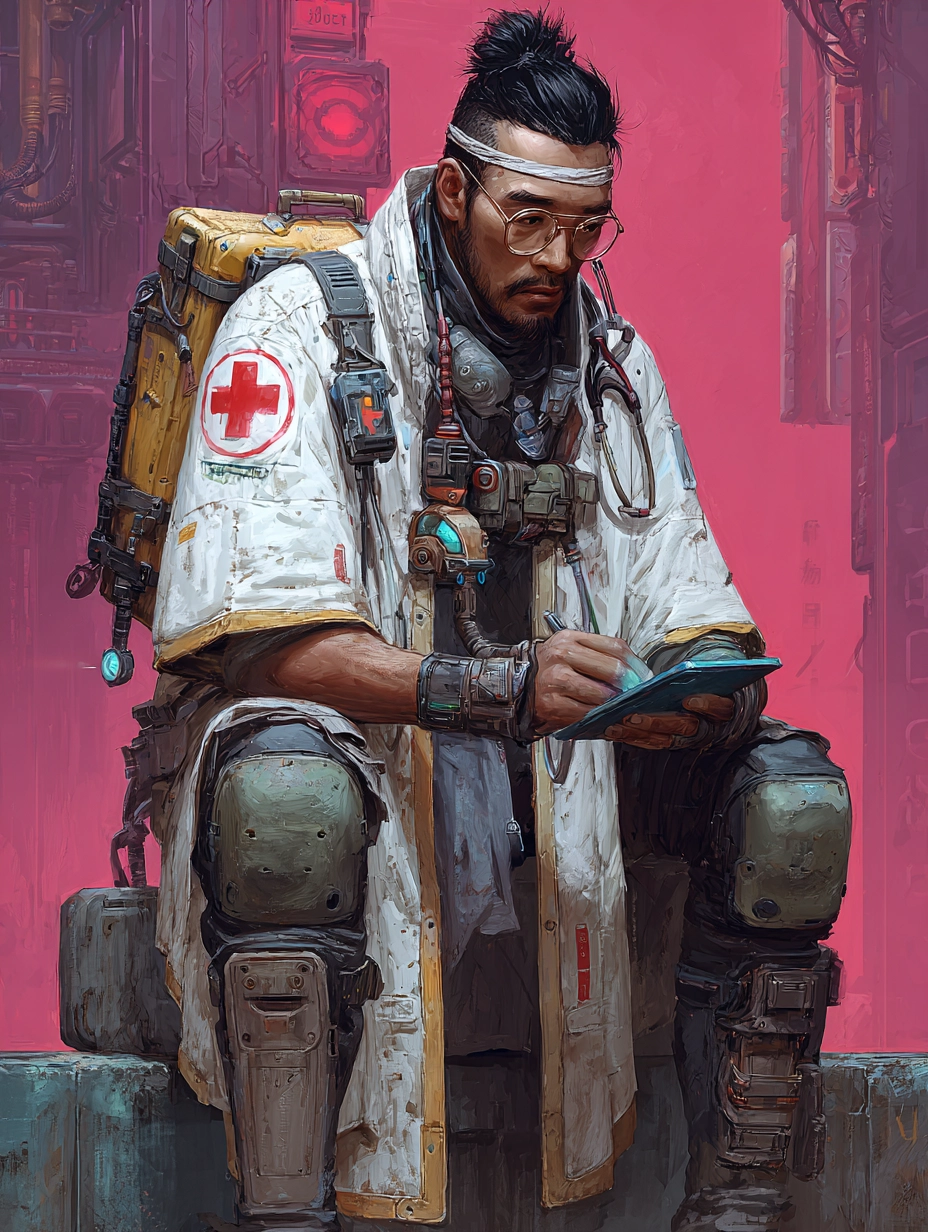
I am a medic because someone has to stop the suffering, Someone must show that the people out here are worth the same care as the people back at the Core.
You are the Shepherd. You have the drugs that keep the madness away. You patch the flesh when the metal tears it. You know that out here, biology is changing. You've seen the mutations; the 'Gloom-touched' skin, the spores that turn men into husks. You carry the stimulants to keep the Gilder awake and the sedatives to put the Soldier down if he snaps. You have blood on your hands, so they don't have to.
In the Verge, where medical facilities are rare, supplies are scarce, and the nearest hospital might be a three-week jump away, that makes you one of the most valuable people on any ship or station. You've sutured wounds in zero-G, performed surgery by flashlight during power failures, and diagnosed diseases using equipment that belongs in a museum. You've held people together with stim patches and willpower when proper treatment was impossible. You've made decisions that doctors in Core World hospitals would never face: who gets the last dose of antibiotics, whose injury gets attention first, who lives and who dies when you can't save everyone.
Medicine on the frontier isn't what they taught you in school, if you went to school. It's improvisation. It's triage. It's knowing that the textbook solution requires equipment you don't have, drugs that expired three years ago, and facilities that exist only in your memories of better times. You've learned to work with what's available, to substitute and adapt and pray that biology is forgiving enough to survive your compromises.
You might have trained in the gleaming hospitals of Alpha Centauri, learning medicine as it's meant to be practiced before circumstances drove you to the edge of civilization. You might have learned in a colony clinic, where necessity was your only teacher and mistakes were buried quietly. You might have come up through military service, corporate medical divisions, or the black clinics of the Sump.
The path doesn't matter as much as what it taught you: that life is fragile, that death is patient, and that the person standing between them is you.
This responsibility never gets lighter. Every patient is a puzzle, a crisis, a life that depends on your knowledge and skill and luck. You carry the ones you saved as proof that you matter. You carry the ones you lost as weight that never quite lifts. Both collections grow with time.